- Posted on : November 17, 2025
-
- Industry : Corporate
- Type: Blog

Demonstrated Ability vs. Degrees
We are part of a shift within modern enterprises, moving away from degree-based hiring and toward a skills-first approach. As digital tools and AI reshape work, demonstrating relevant and adaptable skills, rather than just possessing academic credentials, has become essential for every worker.
Committing to Skills that Matter
The World Economic Forum’s Future of Jobs Report 2025 predicts that by the end of 2025, more than half of all employees will need to acquire new skills due to the rapid evolution of technology. As traditional technical skills become outdated faster than ever before, the ability to learn and adapt has become the workforce's most critical asset.
A few earnest statistics to consider:
(1) The focus on garnering skills can see a 15.9x increase in the talent pool available (LinkedIn 2025 Skill-Based Hiring Report)
(2) Over 85% of global employers are using skill-based hiring as an imperative - a significant improvement over the past few years (LinkedIn 2025 Skill-Based Hiring Report)
Tech giants like Google, IBM, and Accenture have taken a step further and removed the requirement of having a degree from multiple job postings. Their prime focus is on what candidates bring to the table through tried and tested methods.
Pivot Now to Skills-First HR
Implications for HR and OD leaders
- Hiring for Potential: Companies now use tests, simulations, and AI tools to check real-world skills and potential, instead of leaving people who don’t have certain degrees.
- Internal Mobility: Employees are encouraged to move between different roles and departments based on their skills and interests, rather than adhering to strict career paths.
- Continuous Learning: Gamified learning, short-jab courses, digital badges, and peer-based learning are finding quicker acceptance in an employee’s always-on learning initiative.
- Diversity and Inclusion: Skill-based hiring opens doors for individuals with diverse backgrounds, supports diversity goals, and addresses any talent gaps that may be present.
Impact on Real Results
Infogain’s skills-first strategy actively aligns employee learning and company growth. The primary aim is to build workforce skills, which is the most effective driver of adaptability and measurable business results.
- Infogain Excellence Program: 40+ hours of mandated soft-skill & technical learning (with a KPI-driven approach) to ensure employees of all grades learn to excel in their chosen or pivoted fields.
- Infogain x upGrad Enterprise AI Leadership Catalyst Series: A thought leadership training program for senior leaders to engage in a rigorous exploration of what it means to lead in an AI-infused world.
- Ignis Academy: A one-stop learning platform to master AI skills and tools built on the Ignis Agentic Platform.
Learning programs and initiatives like these help employees transition to new roles and create a flexible and motivated team that is future-ready.
As skill-first hiring approaches become a norm, studies by Harvard Business School reveal that when a skill-first environment attracts non-degree hires, a 25% salary spike and a 10% retention boost are observed. (Harvard Business School, 2022).
Getting Started is the First Step
- Audit job descriptions: Focus on more people with skills and competencies, rather than those who accumulate degrees. This can be made possible by:
Creating a checklist for HR teams to use with important questions, like:
- Are degrees essential for this role’s core tasks
- What specific skills are crucial for high performance in this position
- How can this role be amplified from a candidate’s career growth standpoint
- Can on-the-job skilling fortify this role?
- Will internally job movements or lateral joining suffice for the role
Grade the questions on a scale of 0-5 and adjust these questions according to the requirements. Repeat this process until an ideal candidate is found.
The key takeaway is that this step-by-step approach enables HR teams to efficiently upgrade job descriptions by focusing on the core skills required for each role.
- Invest in learning tools: Ensure employees can easily access and engage with learning opportunities and feel motivated and rewarded for their continued learning.
- Promote skills transparency: Help employees showcase their capabilities and goals.
- Celebrate skills-based moves: Share stories of employees who have grown by taking on new roles or projects. This can be effectively achieved through rewards & recognition programs that value consistency over ad hoc training and learning.
The Bottom Line
While a degree gets you to the door, skills are key to clearly defining success. Prioritizing skills is the core strategy for organizations to attract top talent, drive innovation, and thrive in today's changing environment.
Reference(s):
Skills-based hiring can help us recruit for jobs that don’t exist | World Economic Forum, 2025
Skill-based hiring: Increasing Access to Opportunity | LinkedIn, 2025
Skills-Based Hiring: The Long Road from Pronouncements to Practice | Harvard Business School, 2025
The State of Skills-Based Hiring | Test Gorilla, March 2025
Transforming HR: Skill-based HR and Retention Strategies | SHRM Labs, 2023
About the Author
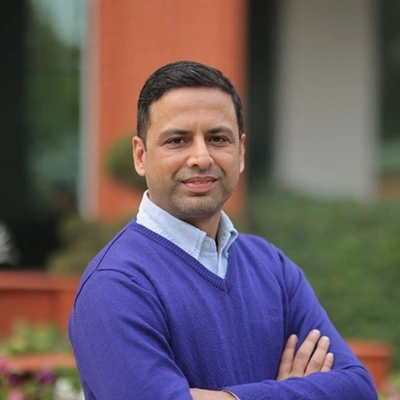
Neeraj Mehra
As a strategic leader in Human Resources, with over 22 years of industry experience, Neeraj Mehra drives HR excellence by fostering an empathetic work culture aligned with business objectives. With extensive experience leading a diverse workforce across the APAC and EMEA regions, Neeraj excels in Strategic Human Resources Leadership and the development of Human Resource Strategies focused on performance, career growth, and recognition on a global scale. His approach is deeply rooted in leveraging innovative HR practices and data analytics to drive impactful change. Neeraj is also a strong advocate for operational efficiency, applying the principles of Automate, Eliminate, and Delegate to streamline processes.
Beyond his professional mandate, Neeraj leads the Global Social Impact Charter, aiming to drive positive societal change. As a thought leader, he actively shares his insights and expertise across various platforms, delivering speaking engagements at industry and academic forums and publishing articles in both print and digital media, contributing to the broader conversation on HR trends and leadership.